


























 0
0
Introduction
A common goal in Iberian pig production is to increase economic efficiency without compromising the meat quality characteristics associated with the Iberian breed. This article describes the basis for the design and implementation of genetic evaluation programs at PIC, as well as the results observed in Iberian populations included in these programs over the past 15 years.
Design of the genetic improvement program
From breeding objectives to tracking results

Establishing a genetic improvement program involves structured management across multiple areas of production and administration, including the following:
- Work with the producer to design the structure and objectives of the improvement program, to agree on which traits we will improve and how we will achieve this.
- Implementation begins with the delivery of weekly genetic reports to the farm. We conduct training sessions and on-farm genetic review visits to provide guidance on using the reports and managing data related to the breeding program.
- Monitoring. Once the program is underway, the genetics service conducts close monitoring—both at the farm level and with the producer—based on weekly and monthly genetic reports and ongoing communication. In addition, regular meetings are important, as they allow us to share and jointly analyze the details of genetic and phenotypic trends for each trait included in the improvement program.
- Analysis of results by the genetic services and the producer to assess whether the results align with expectations in terms of timing and magnitude, and guidance on how to maximize them in the future.
The Iberian breeding program is implemented on PICTraq®, a platform that integrates production records, pedigree information, and genetic evaluations of PIC’s commercial genetic lines. Although there are specific production and reproductive traits unique to the Iberian breed that we must consider, the use of a common genetic platform means that Iberian improvement programs benefit from methodologies and technological advances developed over more than 60 years of genetic evaluation involving millions of animals worldwide.
Fundamentals of the genetic improvement program
From genetic structure to defining objectives
The design of the improvement program is influenced by the fact that Iberian pork production is governed by a specific quality standard (RD 4/2014), which defines commercial categories based on diet and percentage of Iberian blood. This standard stipulates that breeding females must be 100% Iberian, a key factor in determining the genealogical and genetic structure of the improvement program.
The program’s genetic structure reflects the pyramid-shaped system typical of swine production. The genetic nucleus constitutes the top of the pyramid. It is on these farms where the activities necessary to generate genetic progress are concentrated. Unlike many improvement programs for commercial genetic lines, with the Iberian breed it is common for nucleus and multiplier functions to coexist within the same population and even on the same farm. In practice, the main characteristic of the genetic nucleus is that the nucleus population is solely responsible for producing breeding boars, while both the nucleus and the multiplier farms produce purebred Iberian sows to replenish the herds intended for commercial production for slaughter (Figure 1). Thanks to this structure, the genetic progress generated in a relatively small fraction of the population can be gradually disseminated to a large number of commercial animals.
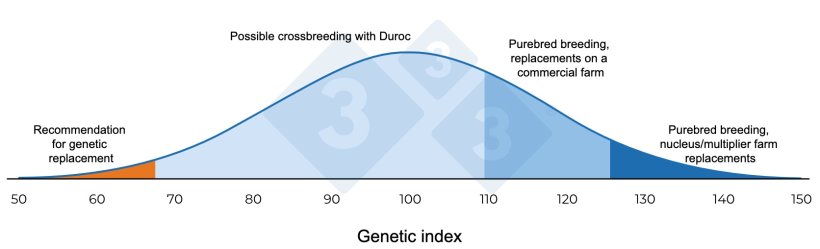
Figure 1. Diagram of genetic management in insemination at the nucleus/multiplier farm.
The first step in the improvement program is to meet with the producer to define the breeding objectives and understand the population's genetic structure. From a genetic standpoint, and in accordance with the quality standard, the Iberian population serves as the dam line within the production system. This aspect determines the program's structure, since purebred Iberian females constitute the breeding base from which genetic progress is generated and disseminated, following the general scheme shown in Figure 1.
Based on our experience working with Iberian pig populations, and in line with the breed’s historically low prolificacy, initial selection indexes typically focus on reproductive traits such as total born, born alive, and number of teats. Genetic improvement is a gradual, cumulative process, so the response to selection takes several years to achieve high levels of prolificacy. Once levels approach 9.5 total born per litter, we generally recommend incorporating piglet quality and viability traits into the improvement program, with the aim of further increasing the kilograms of piglets weaned per sow per year. Figure 2 shows the observed trend in total born among gilts on multiplication farms participating in the program, as well as the stage at which traits related to piglet survival and quality are incorporated into the program.
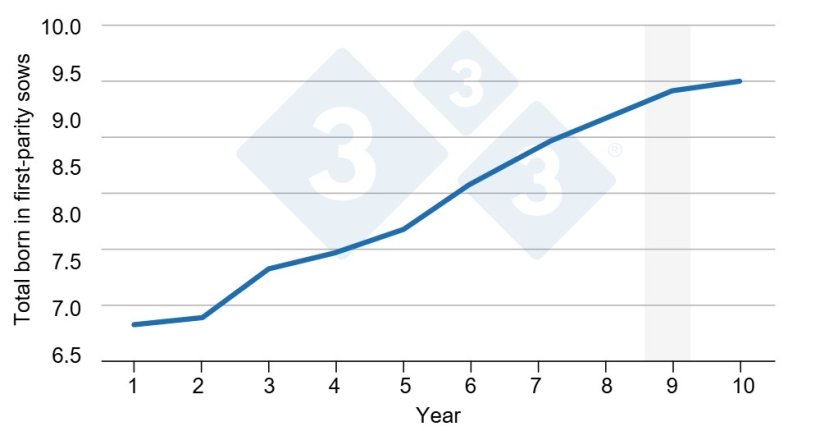
Figure 2. Trend in total born for first-parity sows. Average trend in total born for first-parity sows over 10 years. Actual data from a pool of two multiplier farms, representing approximately 3,000 Iberian sows. The gray shading indicates when new lactation survival traits would be included.
Progress in prolificacy is reflected in the analysis of 17,500 farrowings recorded in PICTraq® during 2025 at four multiplier farms, with an average of 9.67 total born per farrowing. Once this level of productivity has been achieved, pre-weaning survival takes on increasing importance within the improvement program, which explains the routine collection of specific information related to piglet quality and viability.
In this first installment, we have described how a genetic improvement program for Iberian pigs is based on a clear definition of selection objectives and a genetic structure tailored to the specific characteristics of the breed and the production system. The second part will address its practical implementation through the systematic recording of data, the use of genetic evaluations, monitoring reports, and the management of inbreeding in Iberian populations.
